Energy-Efficient Roofing in Texas: Cool Roofs, Color, Ventilation, and Materials
May 29
Searching commercial roofing contractor near me? Learn what DFW property owners should compare for flat roofs, repairs, maintenance, and replacement bids.
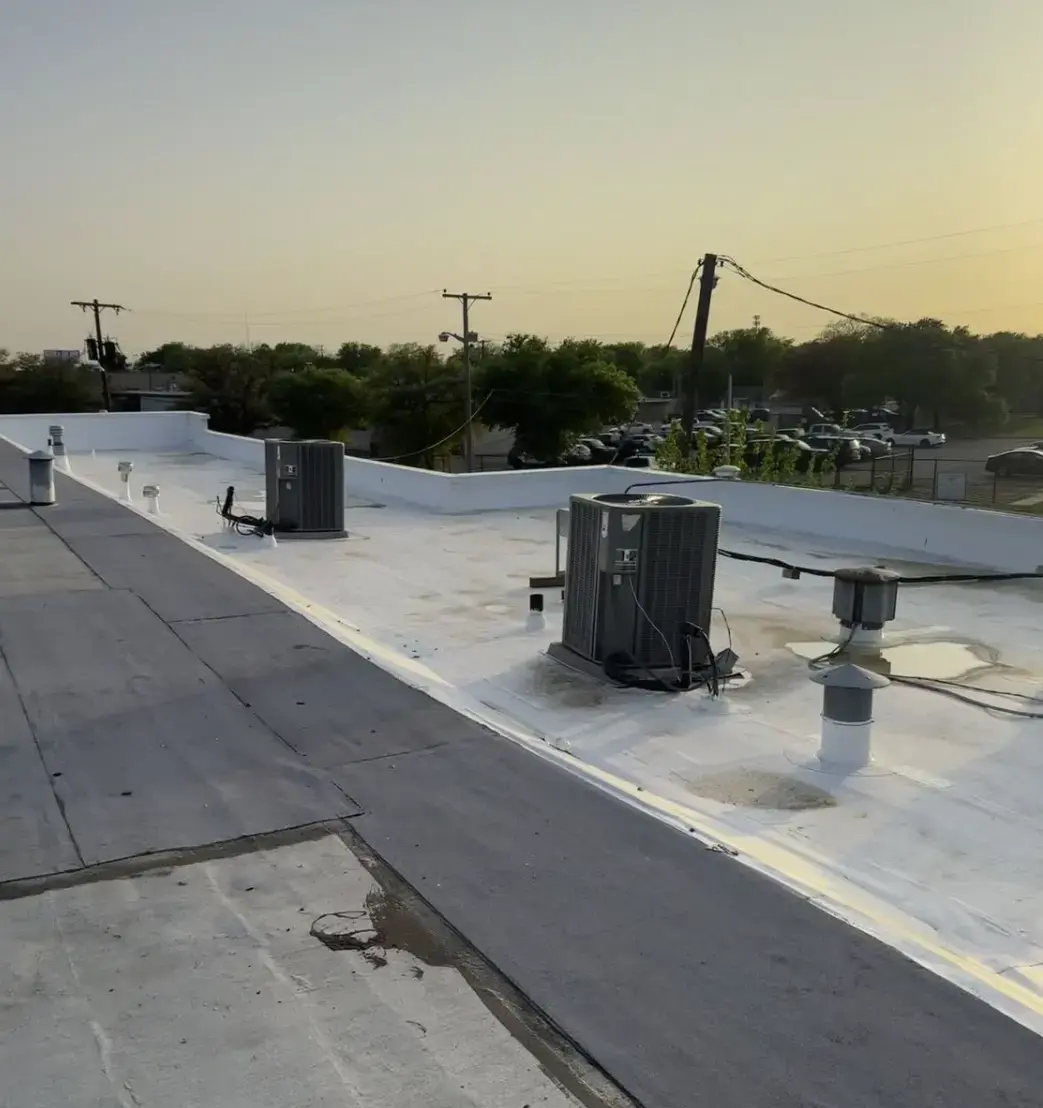
When a property owner searches “commercial roofing contractor near me,” the stakes are different from a residential roof call.
A roof problem at a commercial property can disrupt tenants, inventory, employees, customers, and operations. A small leak over a hallway is annoying. A leak over equipment, retail space, medical offices, or warehouse storage can become expensive fast.
Here is how DFW property owners and managers should evaluate commercial roofing contractors before approving repairs, maintenance, or replacement.
Commercial roofs often have low-slope or flat sections, multiple penetrations, HVAC units, drains, scuppers, parapet walls, and membrane seams.
A real commercial inspection should include:
The contractor should understand how water moves across the roof. On a flat roof, drainage is everything.
| Problem | Why It Matters |
|---|---|
| Ponding water | Speeds membrane deterioration and finds weak seams |
| Open seams | Allows water below the membrane |
| HVAC curb leaks | Common source of recurring leaks |
| Punctures | Often caused by foot traffic or service work |
| Failed flashing | Leads to leaks at walls and transitions |
| Clogged drains | Turns heavy rain into roof load and water intrusion |
| Hail impact | Can damage membrane, coating, vents, and metal accessories |
DFW storms can make minor commercial roof issues urgent quickly.
Commercial roofs often have more than two options.
Best when damage is limited and the roof is otherwise performing. Examples include seam repairs, flashing correction, puncture patches, or localized leak work.
Roof coatings may extend service life when the existing roof is dry, structurally sound, and eligible for coating. Coatings are not a fix for trapped moisture or failing substrates.
Replacement is usually the right call when the roof has widespread membrane failure, saturated insulation, recurring leaks, poor drainage, or storm damage across the system.
A good commercial roofing contractor explains which option fits the roof and why.
Do not approve a vague proposal.
A commercial roof proposal should identify:
Commercial roofing lives in the details. Missing details become change orders.
Low-slope roofs can trap moisture below the surface. If wet insulation remains under a new roof or coating, problems continue.
Depending on the roof, ask whether the contractor recommends:
Not every roof needs advanced testing, but recurring leaks or coating projects should be evaluated carefully.
Commercial roofs should be maintained proactively.
A basic plan may include:
Maintenance is especially valuable for property managers who need documentation for owners, tenants, and insurance.
If hail or wind damages a commercial roof, documentation is essential.
Your contractor should photograph:
Commercial claims can be more complex than residential claims because roof systems, business interruption concerns, and tenant impacts may be involved. Work with a contractor who can document the roof clearly and communicate with adjusters.
Ask:
The right contractor should talk about the building, not just the roof surface.
Good Work Roofing serves commercial and residential properties across McKinney and DFW. For commercial roofs, we focus on clear inspections, practical repair scopes, storm damage documentation, and replacement planning that respects business operations.
Need a commercial roofing contractor near you in DFW? Good Work Roofing can inspect your property, document the roof condition, and provide a clear repair or replacement recommendation.
Schedule a commercial roof inspection or call (214) 836-4511.
Get roofing tips delivered to your inbox
Contact our roofing experts for a free consultation and quote.