Flat Roof Repair in DFW: Commercial Leak Problems Property Owners Should Not Ignore
May 29
A source-backed guide to roof storm damage in DFW, including hail, wind, leaks, inspection timing, insurance documentation, and when to call a roofer.
Updated: May 29, 2026
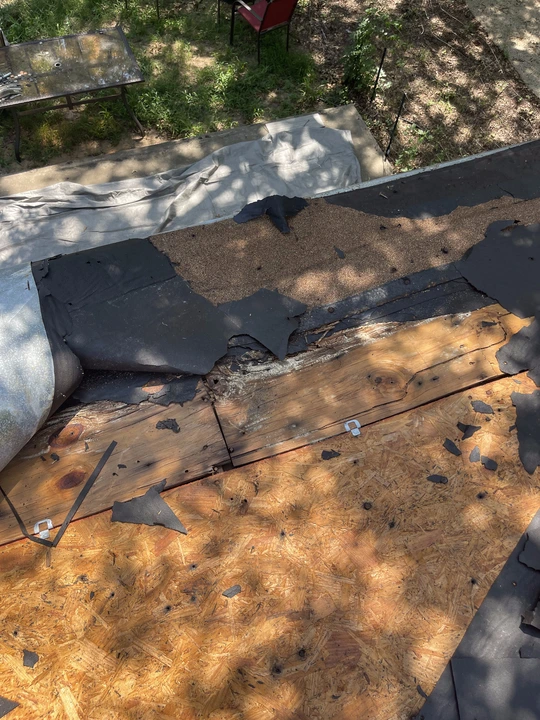
Roof storm damage in DFW includes hail bruising or fracturing shingles, wind-lifted or missing shingles, damaged flashing, dented roof vents, punctures from debris, exposed underlayment, and leaks that begin after severe weather. Homeowners should document visible damage, protect active leaks, and schedule a roof inspection before filing a claim.
North Texas storms can damage a roof without creating an immediate leak. That is why homeowners often need a practical answer to one question: what actually counts as storm damage?
The National Weather Service explains that severe thunderstorms can produce hail at least one inch in diameter or wind gusts above 58 mph, both of which can damage property. In DFW, that matters because asphalt shingles, ridge caps, vents, gutters, and flashing are all exposed to hail, wind, and wind-driven rain.
Good Work Roofing serves homeowners across McKinney, Plano, Frisco, Allen, and the wider Dallas-Fort Worth area, where spring and early summer storms commonly create roof inspection demand.
| Damage Type | What It Looks Like | Why It Matters |
|---|---|---|
| Hail impact | Bruised shingles, granule loss, dents on vents or gutters | Can weaken shingles and shorten roof life |
| Wind lift | Raised, creased, torn, or missing shingles | Can expose underlayment and create leak paths |
| Ridge cap damage | Cracked or missing ridge shingles | Leaves the roof peak vulnerable |
| Flashing damage | Loose metal at walls, chimneys, skylights, or valleys | Common leak source after wind-driven rain |
| Debris impact | Punctures, broken shingles, limb damage | May expose decking or create immediate leaks |
| Interior leak | New ceiling stain, bubbling drywall, wet insulation | Indicates water has already entered the roof system |
If water is entering the home, the first priority is temporary protection. A tarp or emergency repair may be needed before the permanent scope is decided.
Hail damage is event-related. It often appears as impact patterns across exposed slopes and on soft metal components like vents, gutters, and flashing.
Normal wear is gradual. It may include age-related granule loss, brittle shingles, algae staining, or sealant failure. A professional inspection should separate storm damage from aging so the homeowner does not confuse a maintenance issue with an insurance claim.
The Insurance Institute for Business & Home Safety has published research on hail damage modes and roof-cover performance. Their work is useful because it shows why impact-resistant labels do not always tell the whole story; real-world hail performance depends on the product and the way it is tested.
Do not climb on a wet or damaged roof. The risk is not worth it.
Call for a storm damage inspection if you see missing shingles, dented roof metals, new ceiling stains, or granules at downspouts after hail or wind. You should also call if neighbors are getting roofs inspected after the same storm because hail paths can be narrow but intense.
Good Work Roofing provides photo-based inspections and practical repair or replacement recommendations for DFW homeowners.
Yes. Hail or wind can weaken shingles, vents, and flashing without causing immediate interior water stains. A leak may appear later during a heavy rain.
Usually, get an inspection first. Photos and a written opinion help you decide whether the damage looks claim-worthy or whether a repair is likely below your deductible.
No. Dented gutters can support storm documentation, but a roofer still needs to inspect the shingles, ridge caps, vents, flashing, and interior signs before recommending a claim.
Need a DFW roof storm damage inspection? Good Work Roofing can document hail, wind, leaks, and roof condition with clear photos.
Get roofing tips delivered to your inbox
Contact our roofing experts for a free consultation and quote.